Unreal Technical Art Showcase
Paper Labyrinth is a technical showcase built in Unreal Engine 5 designed for a gameplay environment. The core concept centers on a book collection that has evolved beyond its shelves, consuming and reshaping the space around it.
This project served as practice for developing custom tools to create and manage large numbers of instances meshes and performant VFX without sacrificing real-time efficiency.
Tools used: Unreal Engine 5.5.4 and Photoshop
________________________________________________________________________________________________________________
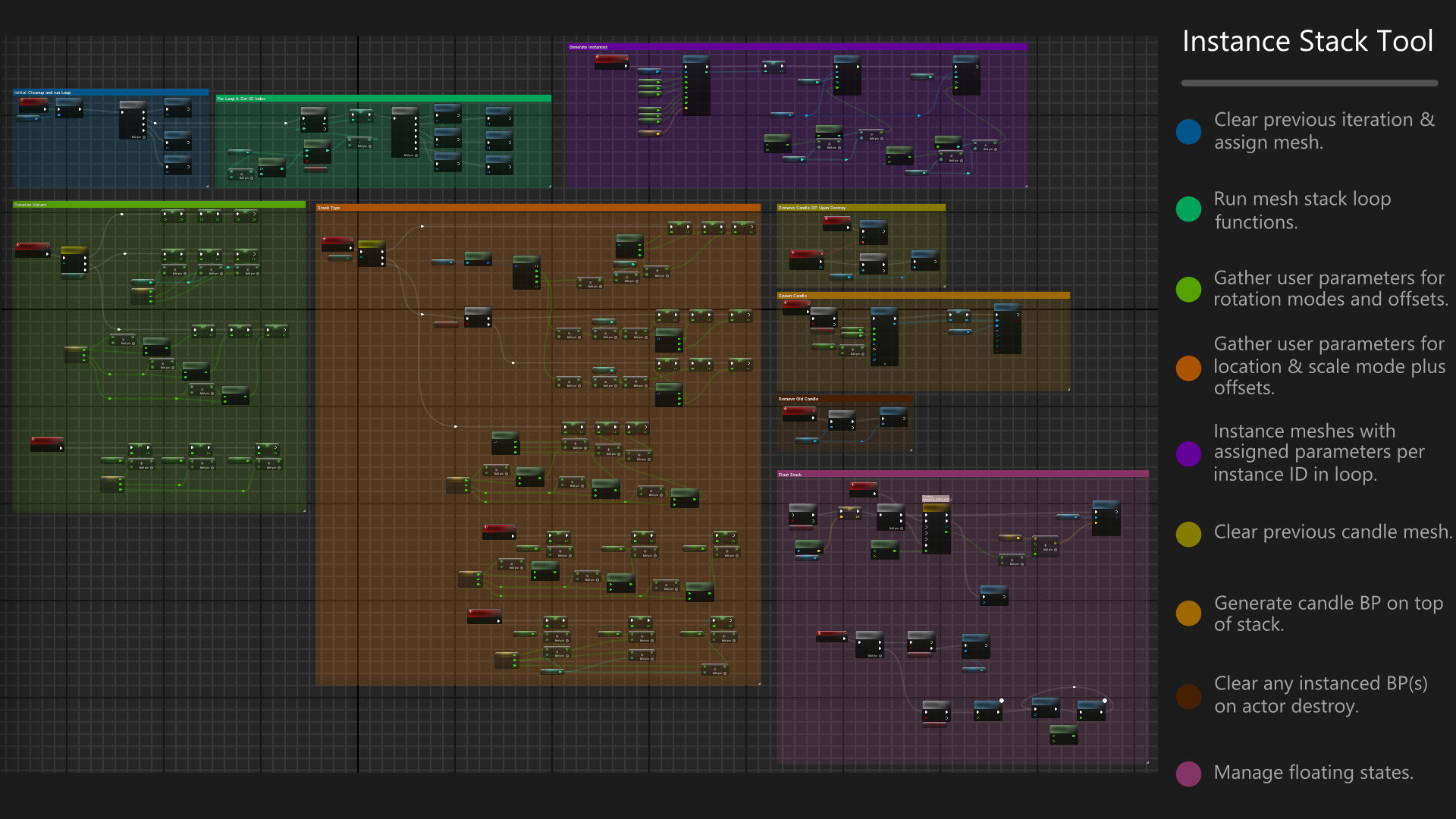
A custom blueprint tool built to speed up the placement and adjustment of books by instancing them based on a large set of exposed parameters. It allows meshes to be spawned with varying amounts of random influence for a more natural feel vertically, horizontally, or even in a spiral with customizable offsets in position and rotation. I cannot imagine trying to do another project like Paper Labyrinth without tools like this.
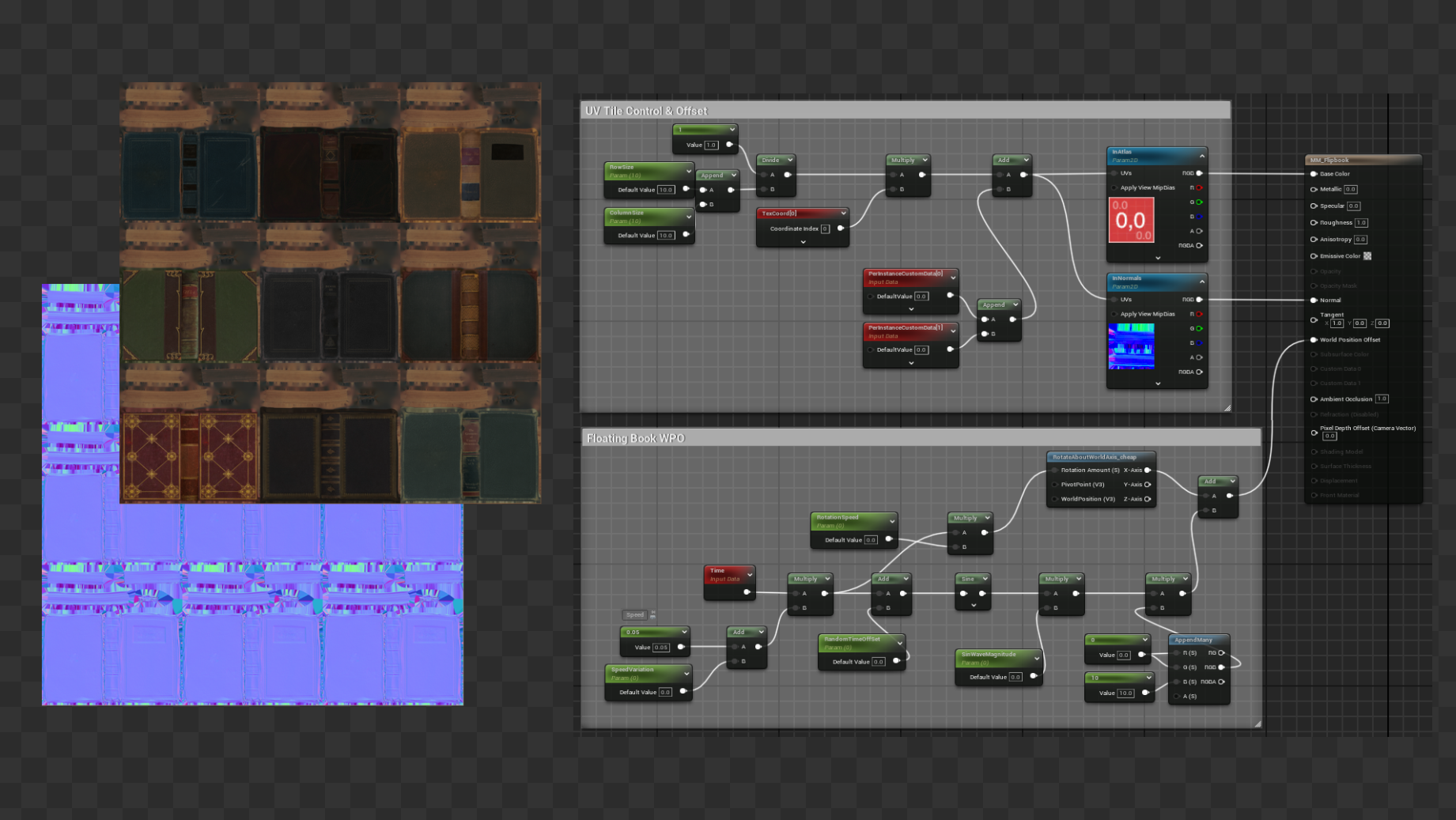
A single 1024 x 1024 texture containing 9 unique covers is all that was needed for every book in the scene, including the ones that float and spin. Each book randomly selects a cover from the atlas sheet, and chooses a new one when the stack is generated again, so if a distribution generated doesn’t fit an artist’s desired look, quickly cycling through alternate stacks until a better combination is found is incredibly easy.
_________________________________________________________________________________________
The piano spawns music notes across the top of the keys by reading the volume level of the song its playing, allowing for this effect to work even during gameplay. Unreal’s Audio Analyzer plugin checks for peaks above a specified volume and then triggers the attached Niagara system to spawn a note. The Niagara system samples a location along the Blueprint’s spline for a location using a scratch module, allowing this to be scaled to a variety of shapes for different effects. For projects requiring precise placement of effects to match the pitch of notes, pairing this with a frequency analyzer plugin would be a great addition. The song is being spawned by the piano at its location with attenuation settings applied for a more immersive experience for players walking around the room.
_________________________________________________________________________________________
The the ritual being performed to summon another book for the collection starts with a warping of the space around the circle that collapses in and then expands rapidly. The distortion is a circle texture with refraction that is created twice in a Niagara system, one shrinking and one growing. When the second one is activated, a burst of smoke/dust (recycled texture from the torch) is also created along with a warped set of particles that spawn along the ring and spiral away. Initializing these with a Vortex and Curl node applied at spawn adds needed variety to the starting shape.
The ring that lights up on the floor is filled by scaling a parameter with a circle node to unmask an emissive layer. A noise layer is also applied to the mask so that the leading edge gets broken up and adds subtle motion to the whole shader. The original circle I drew was too thick and was quickly overpowering the shot with the smallest amount of emissive light; sketching it thinner allowed for stronger effects that look more natural.
The book that is summoned is composed of a shader that warps a rune texture over the surface of the model and a Niagara system that spawns identical ruins to create the effect they are being lifted off the pages. There’s also some motion in the vertical axis using world position offset and the spin of the book after appearing is controlled via the sequencer.
_________________________________________________________________________________________
The magical slime started as blood originally, but became a mystery glowing substance after a rework of the lighting in the scene created a need for more contrast against the ethereal purple that hangs thick in the air. Following a sketch session of the splotches and drips, I selected nine of my favorites and created another atlas texture that can be scrolled through while dressing the scene to quickly get the right amount of gross where its needed. A simple particle system placed at key locations around the slime also help to sell the magical nature of the goo.
_________________________________________________________________________________________
Sketching some cobwebs into a lightweight shader with a wind node was all that was needed to make a quick tool for cobwebs that gently sway. Adding a parameter to quickly select the desired texture and transparency made adjusting them to match the location and lighting of the area around them effortless to blend in or stand out where required.
_________________________________________________________________________________________
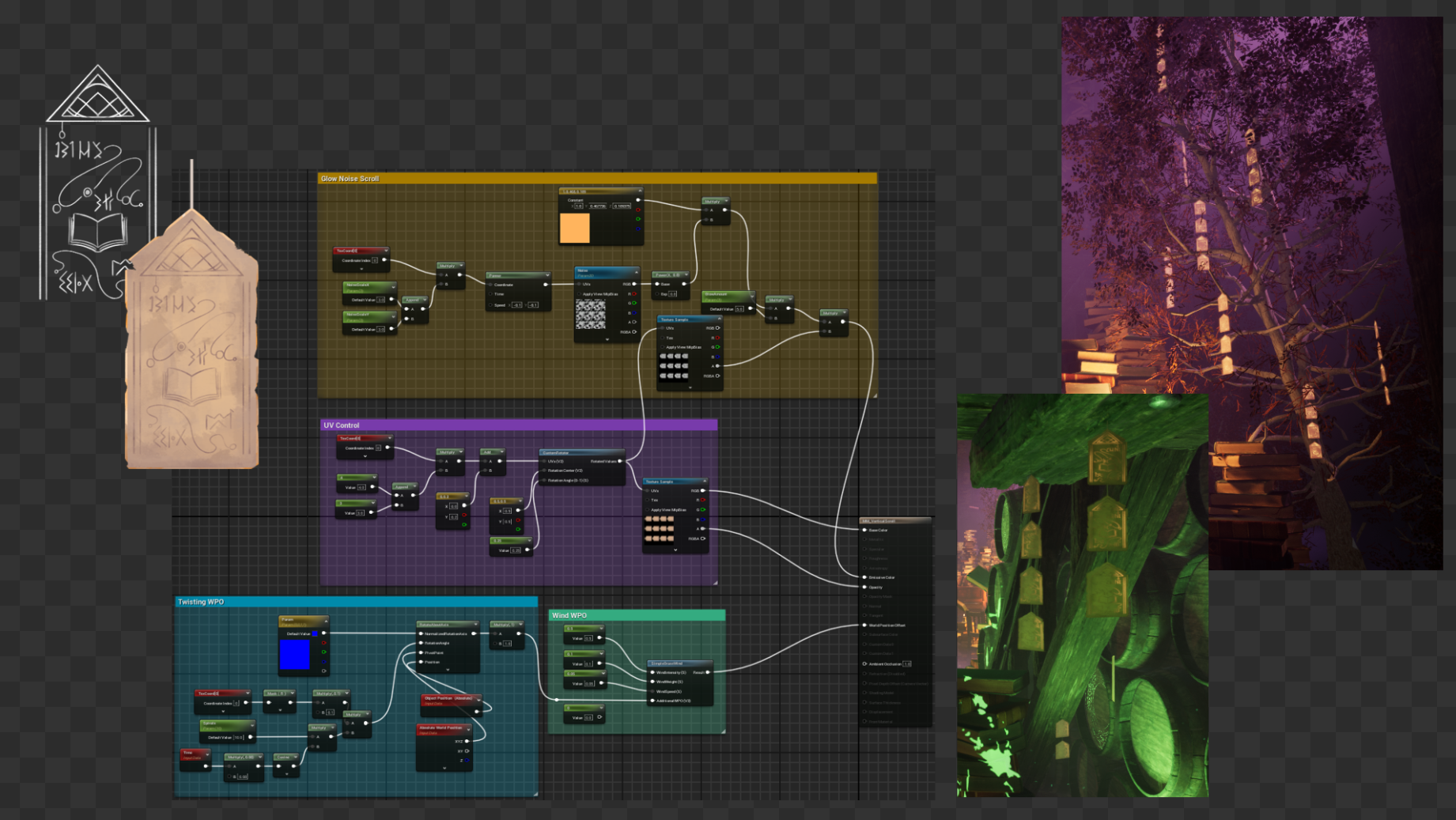
The hanging spell tags operate similarly to the cobwebs, but have an additional layer of World Position Offset in the shader that slowly twists and untwists the plane mesh they are on. They also have a subtle gold shimmer that washes over the surface of the tag upon closer inspection. I enjoy finding opportunities to paint quick textures like this, and they bring additional visual interest to the tree above the piano as well.
_________________________________________________________________________________________
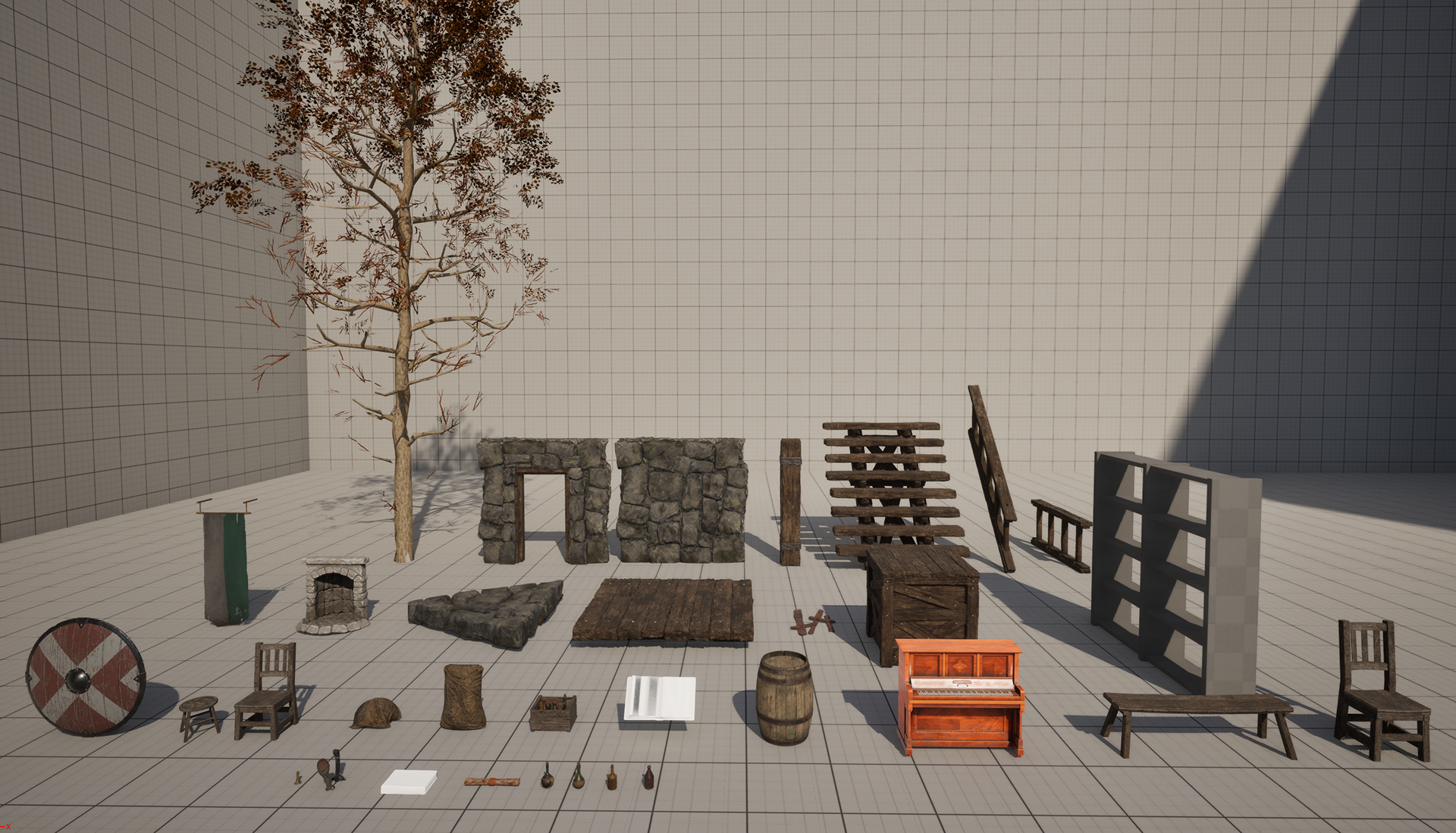
The entire collection of meshes that were sourced for this scene from various free Fab assets and packs.
Let's discuss how I can boost your project or team. CONTACT